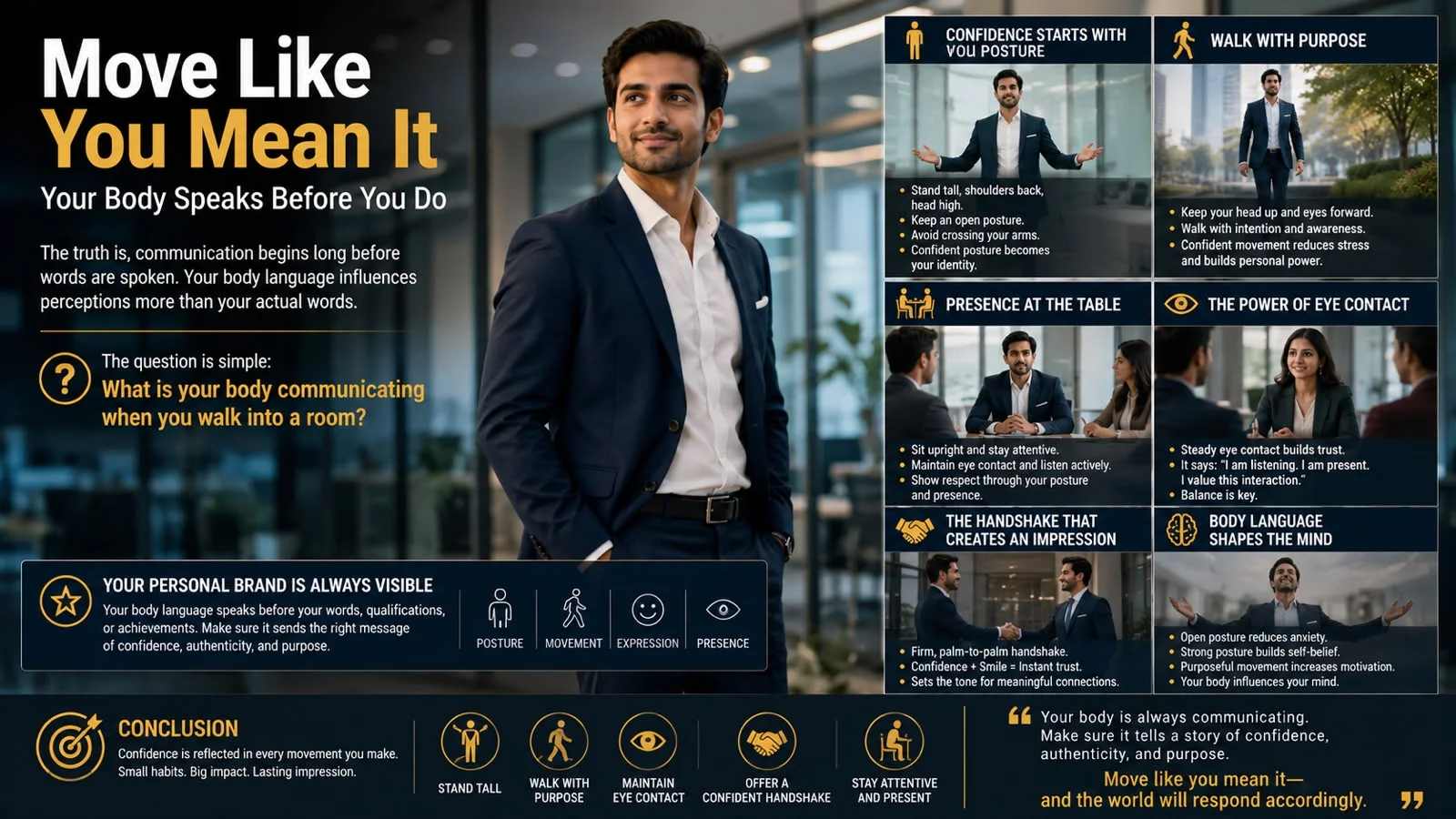
Your Body Speaks Before You Do
Have you ever met someone who instantly commanded attention the moment they entered a room? Before they spoke a single word, you sensed confidence, credibility, and presence.
The truth is, communication begins long before words are spoken. Your body is constantly sending signals about who you are, how you feel, and how much confidence you possess. People form impressions within seconds based on posture, facial expressions, gestures, eye contact, and movement.
Research suggests that a significant portion of interpersonal communication is nonverbal. In many situations, your body language influences perceptions more than your actual words.
What is your body communicating when you walk into a room?
Confidence Starts With Posture
A confident posture is one of the simplest yet most powerful tools for personal transformation. Standing tall with relaxed shoulders, an upright spine, and a lifted head immediately projects confidence and self-assurance.
Slouched shoulders, a lowered head, and closed body positions often signal uncertainty or lack of confidence—even when that may not be true.
Body language experts emphasize maintaining an open posture. Avoid crossing your arms unnecessarily, as it may communicate defensiveness. Instead, keep your body open and approachable.
Over time, confident posture becomes part of your identity.
Walk With Purpose
Successful leaders and professionals move with intention rather than hesitation.
Walking with purpose means keeping your head up, being aware of your surroundings, and taking deliberate steps toward your destination.
Looking down continuously while walking can communicate insecurity, while an upright posture and forward gaze reflect confidence and competence.
Studies show that posture and movement influence not only how others perceive us but also how we feel internally. Confident movement reduces stress, improves mood, and increases personal power.
The body influences the mind just as the mind influences the body.
Presence at the Table
Whether in meetings, classrooms, or social gatherings, sitting posture matters.
Sit upright, stay attentive, and avoid slouching or distracted movements. Maintain eye contact, sit straight, and actively listen.
These small habits communicate respect, professionalism, and engagement, shaping how others perceive your trustworthiness and confidence.
The Power of Eye Contact
Eye contact is one of the strongest forms of nonverbal communication. Steady, natural eye contact communicates confidence, sincerity, and attentiveness.
It tells others: “I am listening. I am present. I value this interaction.”
Avoiding eye contact may signal nervousness, while excessive staring may feel uncomfortable. Balanced eye contact builds trust and connection.
The Handshake That Creates an Impression
First impressions happen within seconds. A firm, balanced handshake combined with a genuine smile establishes credibility and warmth.
A good handshake is neither weak nor overpowering—it reflects confidence, professionalism, and respect.
When combined with eye contact and a pleasant expression, it becomes a powerful introduction that people remember.
Body Language Shapes the Mind
Body language influences not only others but also yourself. Standing tall, smiling, and maintaining open posture sends positive signals to your brain.
Open body language reduces anxiety, strong posture improves self-belief, and purposeful movement increases motivation.
The body becomes a tool for shaping the mind, and consistent practice makes confidence natural.
Your Personal Brand Is Always Visible
People judge not only what you know but also how you present yourself. Your body language is a key part of your personal brand.
Before your skills, achievements, or qualifications are known, your posture, expressions, and presence are already communicating.
These small signals may seem simple, but they have a powerful impact on how others perceive you—and how you perceive yourself.