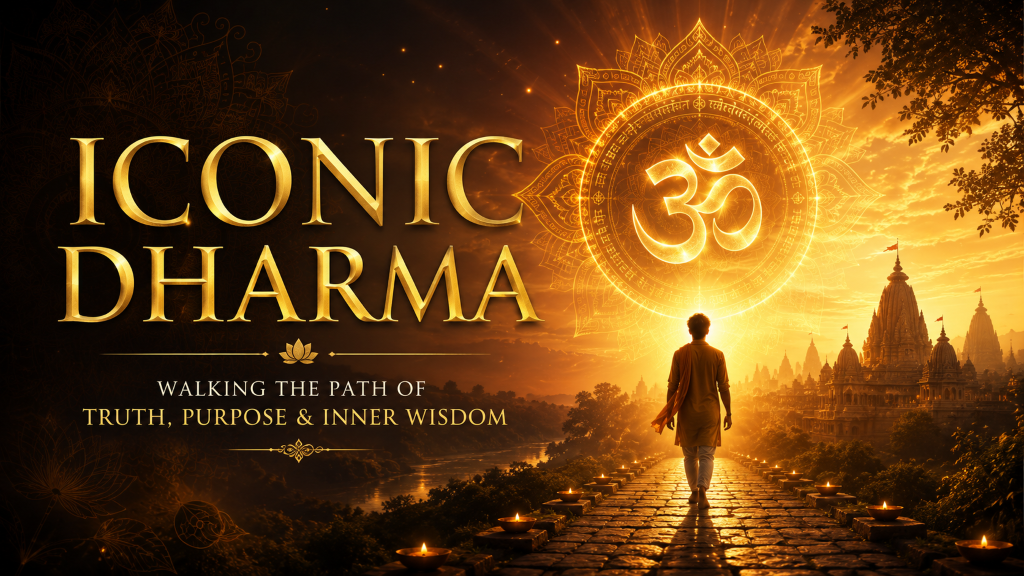
In an age where life moves at an incredible pace, many young people find themselves searching for purpose, stability, and inner peace. Technology has made us more connected than ever, yet many feel disconnected from themselves. Amidst this fast-changing world, the timeless wisdom of Dharma offers a guiding light. Dharma is not merely a religious belief or a collection of rituals—it is the art of living with integrity, responsibility, compassion, and balance.
The word Dharma comes from the Sanskrit root "Dhri," meaning to uphold, sustain, or support. It represents the universal principles that maintain harmony within individuals, families, societies, and nature. When we live according to Dharma, our actions become purposeful, our relationships become meaningful, and our lives move in alignment with truth rather than temporary desires.
True Dharma begins with everyday choices. It teaches us to speak honestly even when it is difficult, to respect our parents and teachers, to fulfill our responsibilities sincerely, and to show kindness without expecting anything in return. These simple actions may appear ordinary, but together they create extraordinary character. Dharma reminds us that greatness is built not through occasional heroic acts but through consistent righteous living.
Indian spiritual traditions have preserved many practices that help cultivate a dharmic life. Offering prayers with gratitude, practicing meditation, studying uplifting scriptures, participating in Satsang (the company of wise people), performing Seva (selfless service), and maintaining discipline in daily life are all ways of strengthening inner character. These practices are not meant to separate us from the modern world; rather, they prepare us to face it with wisdom and emotional resilience.
One of the most powerful teachings of Dharma is that success and values should never be separated. Academic achievements, professional growth, and financial prosperity become truly meaningful only when they are guided by honesty, humility, and responsibility. A successful person without values may gain wealth, but a person who lives with Dharma earns trust, respect, and lasting happiness.
For students and young professionals, Dharma serves as a personal compass during moments of confusion. When faced with difficult decisions, Dharma asks simple yet profound questions: Is this truthful? Is it beneficial? Does it respect others? Will it create harmony? These questions help transform ordinary choices into opportunities for personal growth.
Dharma also teaches us to live in harmony with nature. Every element of creation—earth, water, air, fire, and space—works together in perfect balance. Human beings are called to protect this balance through gratitude, environmental responsibility, and mindful living. Respecting nature is not separate from spirituality; it is one of its highest expressions.
History is filled with individuals who embodied Dharma through courage and compassion. Whether it was Lord Rama's unwavering commitment to truth, Lord Krishna's wisdom in guiding righteous action, or countless saints who dedicated their lives to serving humanity, each demonstrated that Dharma is not limited to temples or scriptures—it is lived through action.
Ultimately, Iconic Dharma is about becoming a person whose presence brings peace, whose words inspire confidence, and whose actions create positive change. It transforms ordinary individuals into responsible citizens, compassionate leaders, and conscious human beings.
In a world filled with distractions, Dharma remains timeless because truth never goes out of fashion. When young minds embrace its values, they discover that the greatest success is not simply achieving personal goals—it is becoming a person whose life itself becomes an inspiration for others.
Walk with Dharma, act with integrity, and let your character become your greatest achievement.