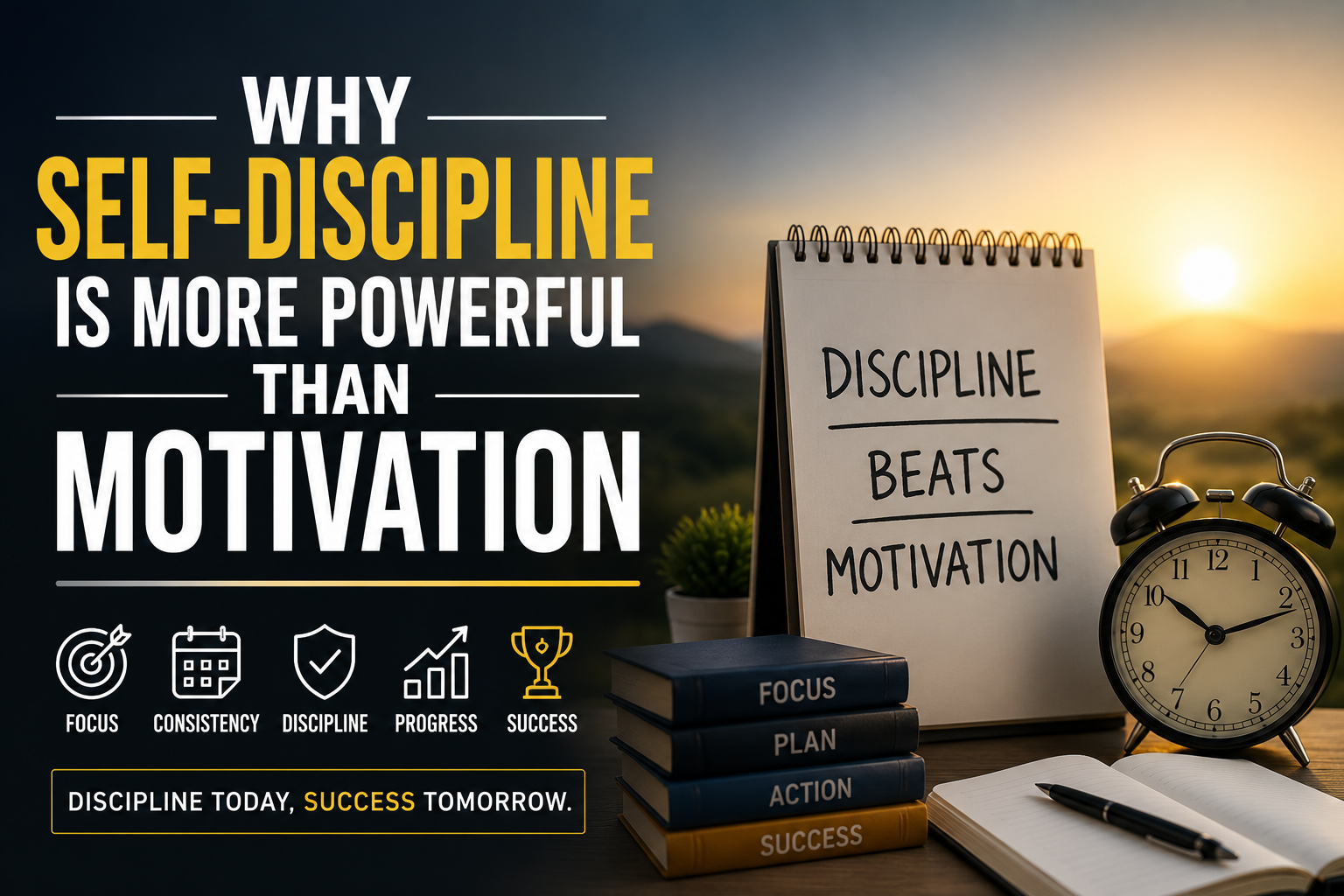
There are moments in life when we feel highly motivated to achieve our goals. We promise ourselves that we'll wake up early, study regularly, exercise daily, or learn a new skill. However, as days pass, that excitement often fades, and many of those promises remain unfinished. This is because motivation is temporary—it comes and goes depending on our emotions and circumstances. Self-discipline, on the other hand, is what keeps us moving forward even when motivation disappears. It is the ability to stay committed to our goals, regardless of how we feel on a particular day.
Motivation is an excellent starting point, but it isn't reliable enough to build long-term success. Some days you'll feel energetic and inspired, while other days you'll feel tired, distracted, or discouraged. If your actions depend only on motivation, your progress will be inconsistent. Self-discipline removes this uncertainty by creating routines and habits that help you stay focused. It teaches you to take action because you know it's the right thing to do, not because you feel like doing it.
One of the greatest strengths of self-discipline is consistency. Success rarely comes from one extraordinary effort; instead, it is built through small actions repeated every day. Reading a few pages of a book, practicing a new skill, exercising regularly, or completing daily responsibilities may seem like simple tasks, but over time these habits create remarkable results. Discipline helps you stay committed to the process, understanding that meaningful achievements take time and patience.
Self-discipline also builds resilience. Life is full of challenges, setbacks, and unexpected obstacles. Exams may not go as planned, job opportunities may be delayed, and personal goals may take longer to achieve. During these moments, motivation often fades because the journey becomes difficult. Discipline, however, encourages you to continue despite temporary failures. It reminds you that every setback is an opportunity to learn, improve, and grow stronger.
In today's digital world, maintaining focus has become more challenging than ever. Social media, endless notifications, and constant distractions make it easy to lose valuable time. Self-discipline helps you manage these distractions by setting clear priorities and making better decisions about how you spend your time. It allows you to focus on what truly matters instead of getting caught up in temporary pleasures that delay long-term success.
The good news is that self-discipline is not something people are born with—it's a skill that anyone can develop. It begins with small, consistent actions. Waking up on time, completing tasks before deadlines, limiting distractions, reading regularly, and staying committed to your responsibilities are simple habits that gradually strengthen discipline. Every promise you keep to yourself builds confidence and makes it easier to stay disciplined in the future.
It's also important to understand that self-discipline doesn't mean living a life without enjoyment or flexibility. Instead, it means making thoughtful choices that support your long-term goals while maintaining a healthy balance. True discipline is about understanding your priorities and staying committed to them, even when the easier option is to give up.
History shows that the world's most successful people didn't achieve greatness because they were always motivated. They succeeded because they remained disciplined during difficult times, continued learning when progress was slow, and stayed committed to their purpose. Their achievements remind us that success is built through daily habits, consistent effort, and the determination to keep moving forward.
In the end, motivation may inspire you to take the first step, but self-discipline is what helps you finish the journey. Every small action you take today shapes the person you become tomorrow. By developing discipline, staying consistent, and believing in the value of steady progress, you create a strong foundation for lifelong success. Remember, success isn't about waiting for the perfect moment—it's about making the most of every moment with dedication, patience, and purpose.