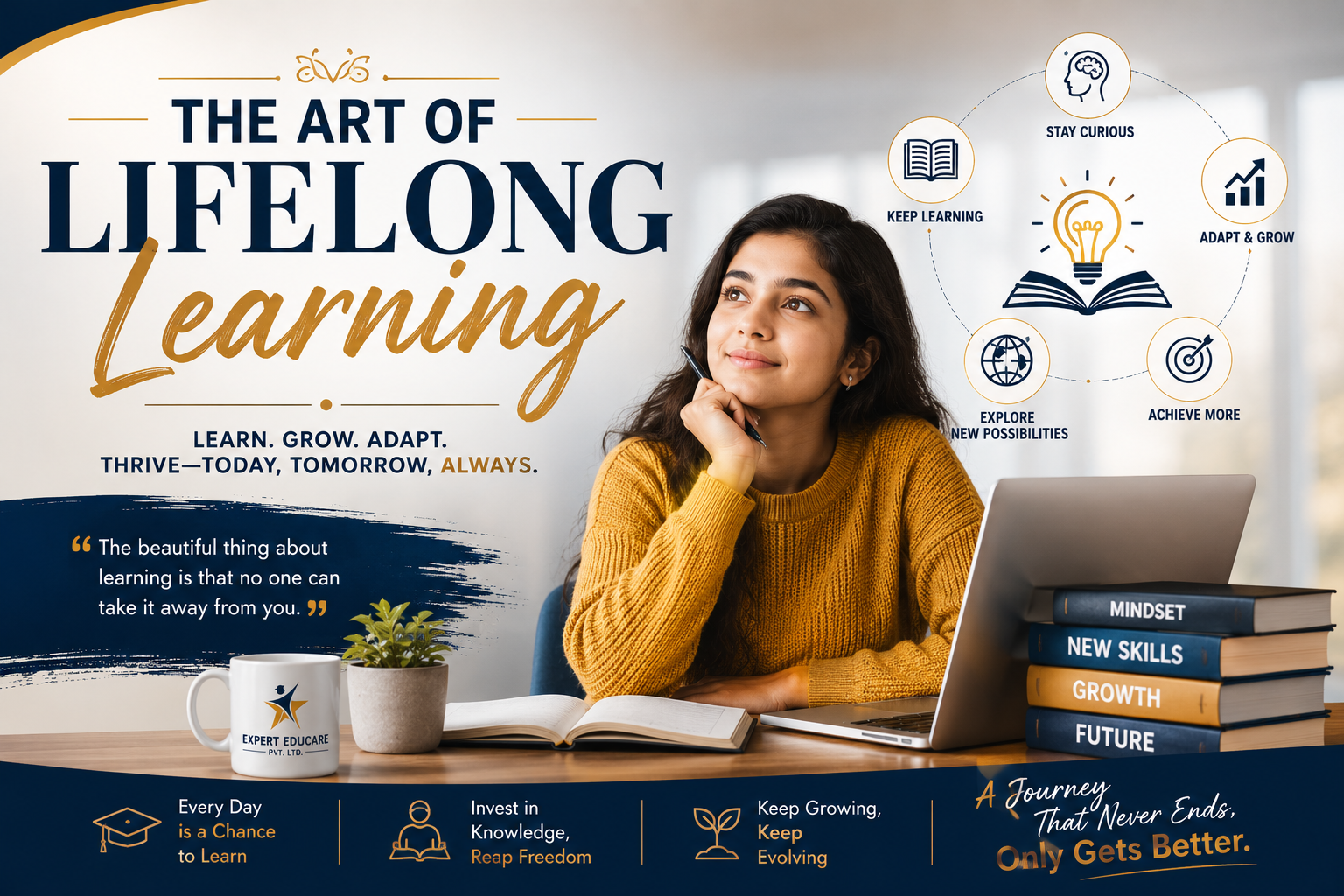
There was a time when learning was seen as something that belonged to a specific phase of life — school, college, perhaps a few years of early career training, and then it was considered "done." In today's fast-changing world, that idea no longer holds true. Learning has quietly transformed from a phase into a lifelong practice, one that shapes not just careers, but how we think, adapt, and grow as individuals throughout life.
Lifelong learning isn't only about acquiring new degrees or certifications. At its heart, it's a mindset — a willingness to remain curious, open, and teachable long after formal education ends. It shows up in reading a new subject out of genuine interest, picking up a new skill, engaging in a hobby that challenges the mind, or simply staying open to unfamiliar ideas and perspectives.
This mindset matters more than ever in a world where change happens rapidly. Industries evolve, technologies shift, and even everyday life demands constant adaptation. Those who embrace learning as an ongoing journey, rather than a finished chapter, tend to navigate these changes with far more confidence and resilience than those who stop growing once formal education ends.
But lifelong learning isn't only about staying relevant professionally — it's equally about personal fulfillment. Learning a new language, exploring art, understanding history, or simply deepening one's knowledge of a subject purely out of curiosity enriches life in ways that go beyond career advancement. It keeps the mind active, nurtures creativity, and often brings a quiet sense of purpose and joy that formal achievements alone cannot offer.
Communities and families play an important role in nurturing this culture of learning. When curiosity is encouraged at every age — not just during school years — it creates individuals who are more adaptable, more empathetic, and more engaged with the world around them, regardless of their profession or life stage.
It's also worth remembering that lifelong learning isn't about constant achievement or pressure to always be productive. Sometimes, it's simply about staying curious for the sake of curiosity itself — learning not to prove something, but because growth and discovery are, in themselves, deeply human pursuits.
Every stage of life offers something new to discover, if we remain willing to keep learning. Whether it's a skill, a perspective, or simply a deeper understanding of the world, the practice of learning continuously is what keeps us growing — not just professionally, but as thoughtful, curious individuals.
Learning is not a destination we reach — it is a practice we carry with us, for life.