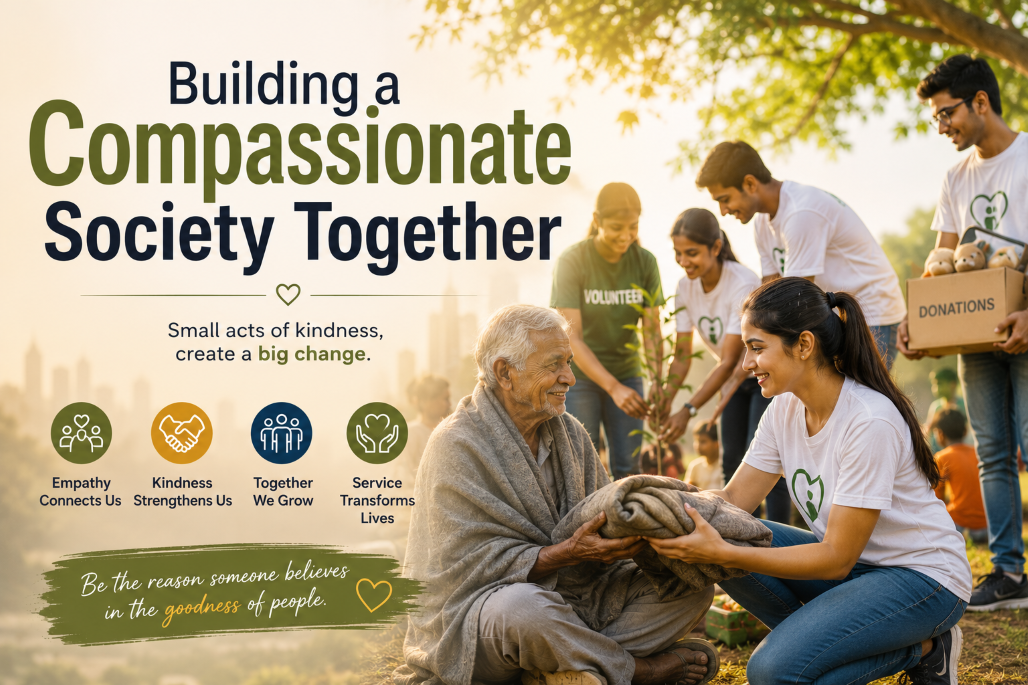
In a world that is becoming increasingly fast-paced and interconnected, compassion has never been more important. While technological progress, academic achievement, and professional success continue to shape modern society, they cannot replace the fundamental human values that bring people together. Compassion is the ability to recognize another person's experiences, respond with empathy, and choose kindness even when there is no expectation of recognition or reward. It is a quality that strengthens relationships, builds trust, and creates communities where every individual feels respected, valued, and supported.
A compassionate society is not created through extraordinary acts performed by a select few; it is built through the consistent choices made by ordinary people every day. A thoughtful conversation, a willingness to listen, an act of generosity, or simply offering encouragement to someone facing difficulties may seem insignificant in the moment, yet these small actions often have a lasting impact. Compassion has the unique ability to inspire hope, reduce loneliness, bridge differences, and remind people that they are not alone in their journey. It transforms simple human interactions into opportunities for understanding and connection.
For young people, compassion is one of the most valuable qualities they can develop alongside knowledge and practical skills. Education prepares individuals for a career, but compassion prepares them for life. It teaches students to appreciate different perspectives, respect diversity, resolve conflicts peacefully, and contribute positively to the world around them. In an age where competition often receives greater attention than cooperation, choosing empathy over judgment and collaboration over comparison becomes an act of quiet leadership. These values not only shape responsible individuals but also influence the character of future workplaces, communities, and society as a whole.
Compassion also begins with awareness. Every person carries experiences, struggles, and challenges that may not always be visible. A kind word, genuine patience, or a simple gesture of understanding can make a meaningful difference in someone's life. Rather than reacting with assumptions or criticism, compassionate individuals seek to understand before they respond. This ability to see humanity in others creates stronger friendships, healthier families, and more inclusive communities where people feel safe to express themselves without fear of judgment.
The responsibility for building a compassionate society does not rest with governments or organizations alone. It belongs to every individual who chooses kindness in everyday life. Whether it is supporting a friend during a difficult time, helping a neighbour, volunteering within the community, respecting people from different backgrounds, or standing against injustice, each positive action contributes to a culture of care and mutual respect. Compassion is contagious; one thoughtful act often inspires another, creating a ripple effect that extends far beyond its original intention.
As the world continues to evolve, the qualities that will define meaningful progress are not limited to intelligence, innovation, or economic growth. Equally important are empathy, integrity, generosity, and the willingness to care for one another. A truly successful society is one where people grow together rather than apart, where differences are met with understanding instead of division, and where kindness is practiced not as an occasional gesture but as a way of life. Building such a society is a shared responsibility, and it begins with a simple yet powerful choice that every individual can make each day—to lead with compassion and inspire others to do the same.