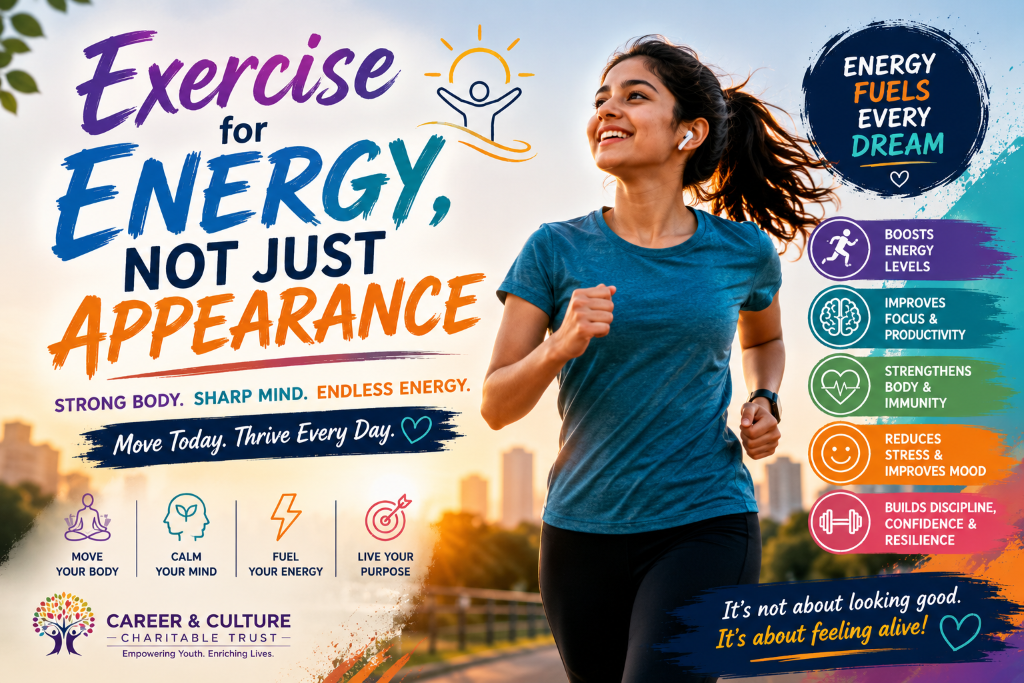
In a world driven by fitness trends, social media challenges, and picture-perfect physiques, exercise is often viewed as a way to achieve a certain body shape or appearance. Many young people begin exercising with the hope of losing weight, building muscles, or looking attractive. While physical transformation can be a positive outcome, it should never be the only reason to stay active. True fitness is about much more than appearance—it is about building a healthier body, a sharper mind, and the energy needed to live life to its fullest.
Exercise is one of the most powerful investments we can make in our overall well-being. Regular physical activity strengthens the heart, improves lung function, builds stronger muscles and bones, enhances flexibility, and boosts immunity. More importantly, it increases the body's natural energy levels, making everyday tasks feel easier and reducing feelings of fatigue. Instead of leaving you exhausted, the right kind of exercise actually helps your body become more efficient, allowing you to perform better throughout the day.
For students and young professionals, energy is one of the greatest assets. Long study hours, academic pressure, screen time, assignments, work responsibilities, and personal commitments can often leave individuals feeling mentally drained. Exercise helps counter this by improving blood circulation and increasing the flow of oxygen to the brain, which enhances concentration, memory, and problem-solving abilities. Even a simple 20 to 30-minute walk, cycling session, yoga practice, or home workout can significantly improve focus and productivity.
Physical activity also has a profound impact on mental and emotional health. During exercise, the brain releases endorphins—often called the "feel-good hormones"—which naturally improve mood and reduce stress. Regular movement can help lower anxiety, improve sleep quality, reduce symptoms of depression, and increase emotional resilience. Rather than seeing exercise as a punishment for eating more or a shortcut to achieving the "perfect body," it should be embraced as an act of self-care that supports both physical and emotional wellness.
One of the biggest misconceptions surrounding fitness is that only intense workouts produce results. In reality, consistency is far more valuable than intensity. Activities such as walking, dancing, swimming, stretching, playing sports, practicing yoga, or simply taking the stairs instead of the elevator all contribute to a healthier lifestyle. The goal is not perfection but regular movement. Every step taken towards an active lifestyle strengthens both the body and the mind.
Another important aspect of exercising for energy is developing a positive relationship with your body. Comparing yourself to unrealistic beauty standards or edited images on social media can lead to frustration and low self-esteem. Every body is unique, and health cannot be measured by appearance alone. True fitness is reflected in how energetic you feel, how well your body functions, how confidently you move, and how resilient you become when facing daily challenges. When you shift your focus from looking good to feeling good, exercise becomes a sustainable habit rather than a temporary obligation.
Movement also teaches valuable life skills beyond physical health. It builds discipline, patience, resilience, and consistency. Progress in fitness rarely happens overnight, and neither does success in life. Learning to show up every day, even when motivation is low, develops the mindset required to achieve long-term personal and professional goals. The habits built through regular exercise often extend into academics, careers, relationships, and overall personal growth.
In today's digital age, where many hours are spent sitting in classrooms, offices, or in front of screens, making time for movement has become more important than ever. Small lifestyle changes can make a significant difference. Walking instead of driving short distances, taking regular stretching breaks, participating in outdoor activities, joining sports clubs, or following a simple daily fitness routine are practical ways to stay active without requiring expensive gym memberships or complicated equipment.
Ultimately, exercise should be seen as a celebration of what the body can do rather than a punishment for how it looks. When we move with purpose, we gain strength, confidence, clarity, and vitality. The energy we build through regular physical activity allows us to learn better, work smarter, connect more deeply with others, and enjoy life with greater enthusiasm. Fitness is not about achieving someone else's ideal—it is about becoming the healthiest, happiest, and most capable version of yourself.
At Career & Culture Charitable Trust, we believe that physical wellness is an essential part of holistic personal development. Through our Mindful Youth Program, we encourage young people to embrace movement as a lifelong habit that supports mental clarity, emotional balance, self-confidence, and overall well-being. When we choose to exercise for energy instead of appearance, we begin to value our health not for how it is seen by others, but for how it empowers us to live with purpose, resilience, and joy.