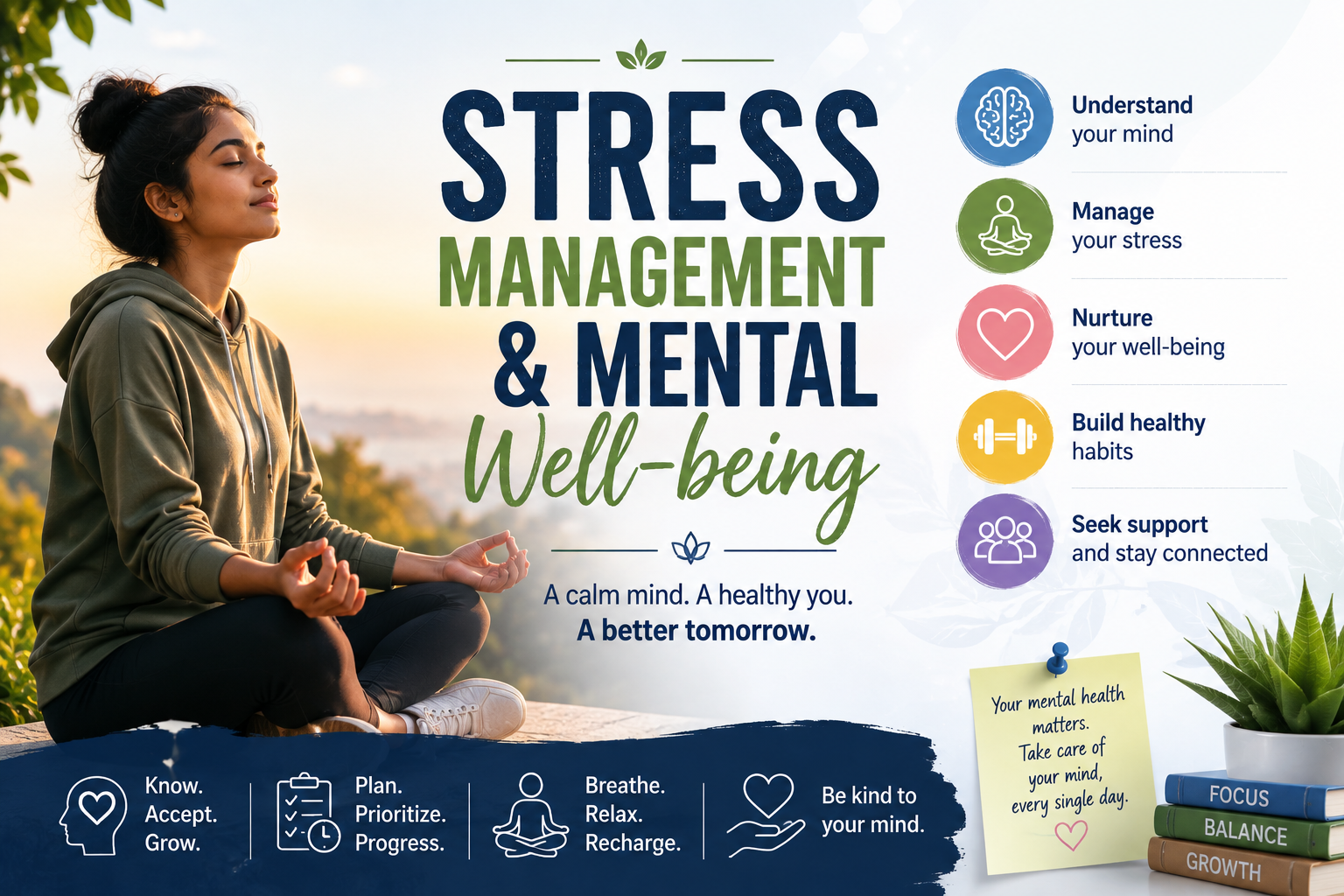
In today's fast-paced world, stress has become a common part of every student's life. Academic pressure, career uncertainty, family expectations, social media comparisons, and the constant desire to succeed can leave young minds feeling overwhelmed. While a certain amount of stress can motivate us to perform better, excessive and unmanaged stress can affect our physical health, emotional balance, relationships, and academic performance. This is why stress management and mental well-being are not optional life skills—they are essential foundations for personal growth and long-term success.
Mental well-being is more than simply the absence of stress or anxiety. It is the ability to think clearly, manage emotions, cope with challenges, maintain healthy relationships, and continue growing even during difficult times. A healthy mind enables students to stay focused, make better decisions, solve problems effectively, and face setbacks with resilience. Just as we take care of our physical health through proper nutrition and exercise, our mental health also requires regular care and attention.
One of the biggest causes of stress among students is the pressure to meet expectations. Many students compare themselves with classmates, worry about examination results, or feel uncertain about choosing the right career. Instead of comparing your journey with someone else's, it is important to remember that every individual has unique strengths, interests, and learning abilities. Success is not about moving faster than others—it is about making consistent progress toward your own goals.
Managing stress begins with building healthy daily habits. Getting enough sleep, eating nutritious food, staying physically active, practicing deep breathing or meditation, limiting unnecessary screen time, and maintaining a balanced routine can significantly improve mental well-being. Taking short breaks while studying, spending time with family and friends, engaging in hobbies, and connecting with nature also help refresh the mind and reduce emotional exhaustion. Small positive habits practiced consistently often have a greater impact than occasional bursts of motivation.
Equally important is learning to express emotions instead of suppressing them. Many students hesitate to talk about their worries because they fear being judged or misunderstood. Sharing your thoughts with trusted parents, teachers, mentors, friends, or professional counsellors can provide valuable support and new perspectives. Asking for help is not a sign of weakness—it is a sign of self-awareness and courage. Everyone experiences challenges, and seeking guidance is an important step toward finding solutions.
Developing emotional resilience is another key aspect of mental well-being. Life will always include setbacks, failures, and unexpected obstacles. Rather than viewing failure as the end of the journey, students should see it as an opportunity to learn, improve, and grow stronger. Resilient individuals focus on solutions instead of problems, adapt to change, and continue moving forward despite difficulties. This mindset not only reduces stress but also builds confidence for future challenges.
Career-related uncertainty is another significant source of stress for young people. Many students feel pressured to make life-changing decisions without fully understanding their strengths or available opportunities. Career counselling can help reduce this uncertainty by providing clarity, self-assessment, and informed guidance. Understanding your personality, interests, skills, and future career options allows you to make confident decisions rather than choices based solely on pressure or assumptions.
Ultimately, mental well-being is not about living a life without challenges—it is about developing the strength to face challenges with confidence, balance, and hope. A calm and healthy mind is one of the greatest assets a student can possess. When students learn to manage stress, practice self-care, seek support when needed, and maintain a positive outlook, they become better prepared for both academic success and personal fulfillment. Remember, your greatest achievement begins with taking care of the person who makes every dream possible—you.