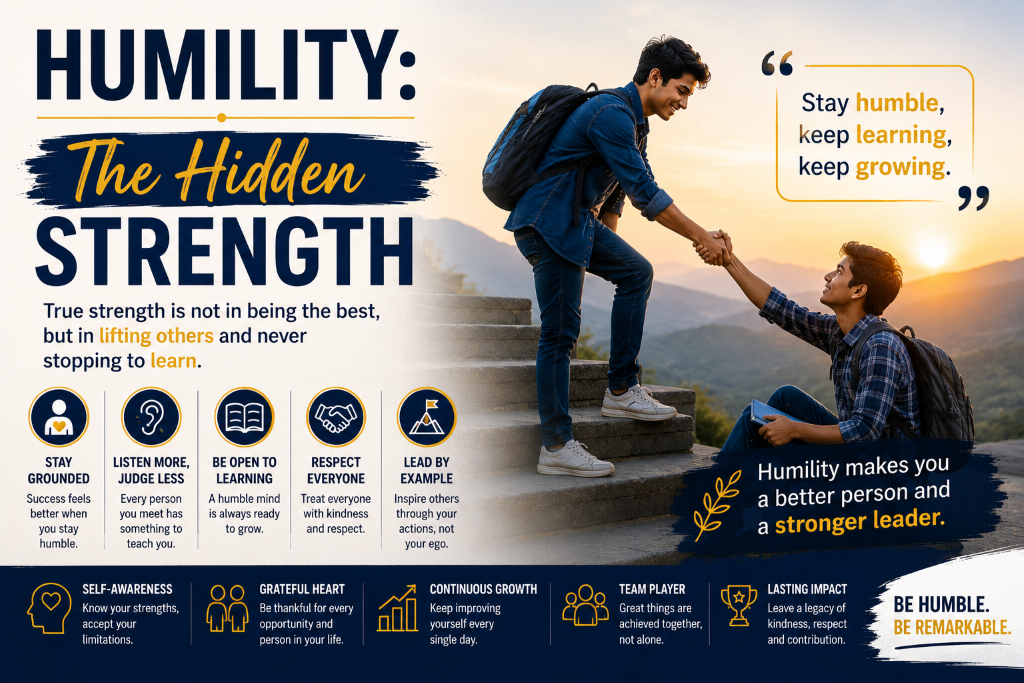
In a world where people often compete for attention, recognition, and achievements, humility may seem like an old-fashioned quality. However, true success is rarely built on arrogance or ego. It is built on the willingness to learn, respect others, admit mistakes, and continue growing. Humility is not about thinking less of yourself—it is about thinking of yourself less and recognizing that there is always something new to learn from every experience and every person you meet. It is a quiet strength that shapes character, builds meaningful relationships, and creates lasting success.
Many people believe that confidence and humility are opposites, but the truth is quite different. Confidence allows you to believe in your abilities, while humility reminds you that no one knows everything. A confident and humble person celebrates achievements without becoming arrogant, accepts praise with gratitude, and remains open to feedback and improvement. This balance creates individuals who inspire others through their actions rather than seeking validation through words.
For students, humility is one of the most valuable qualities they can develop. Academic success, talent, or leadership opportunities should never become reasons to look down on others. Every classmate, teacher, mentor, and friend has unique experiences and perspectives that can teach valuable lessons. Students who remain humble are more willing to ask questions, seek guidance, collaborate with others, and accept constructive criticism. As a result, they continue learning and improving throughout their lives.
Humility also plays an important role in personal and professional growth. In today's rapidly changing world, knowledge evolves constantly, and new skills are always emerging. People who believe they already know everything often stop learning, while those who remain humble continue to adapt and grow. Employers and organizations value individuals who are respectful, open-minded, dependable, and willing to work as part of a team. Technical expertise may help someone secure a job, but humility, integrity, and collaboration often determine long-term career success.
Another important aspect of humility is the ability to accept mistakes. Everyone experiences failure, makes poor decisions, or encounters unexpected challenges. Humble individuals do not hide their mistakes or blame others. Instead, they acknowledge them, learn from the experience, and use those lessons to become wiser and stronger. This attitude builds resilience, emotional maturity, and self-awareness—qualities that are essential for both personal development and effective leadership.
Humility also strengthens relationships. Respecting different opinions, listening carefully, appreciating the contributions of others, and expressing gratitude create trust and cooperation. Whether at home, in school, at college, or in the workplace, people naturally enjoy working with individuals who treat everyone with kindness and respect. True leaders understand that leadership is not about controlling others; it is about serving, encouraging, and helping others succeed.
Social media often encourages comparison and the desire to constantly prove ourselves. It can create the illusion that success means having more followers, more recognition, or more achievements than others. Humility reminds us that real success is measured not by how much attention we receive but by the positive impact we create. A humble person focuses on continuous improvement, meaningful relationships, and contributing to society rather than seeking constant applause.
Career counselling also encourages humility through self-awareness. Understanding your strengths is important, but recognizing your areas for improvement is equally valuable. Students who are open to feedback and willing to explore new opportunities make better career decisions because they understand that learning is a lifelong journey. A humble attitude allows individuals to embrace change, develop new skills, and confidently prepare for the future.
Ultimately, humility is not a sign of weakness—it is one of the greatest strengths a person can possess. It allows us to remain grounded during success, hopeful during failure, and respectful toward everyone we meet. True greatness is not measured by how loudly we speak about our achievements but by how quietly we continue to learn, grow, and help others. When knowledge is combined with humility, success becomes meaningful, leadership becomes inspiring, and personal growth becomes limitless. Remember, the strongest people are not always those who seek the spotlight—they are often those who let their character shine through their actions.