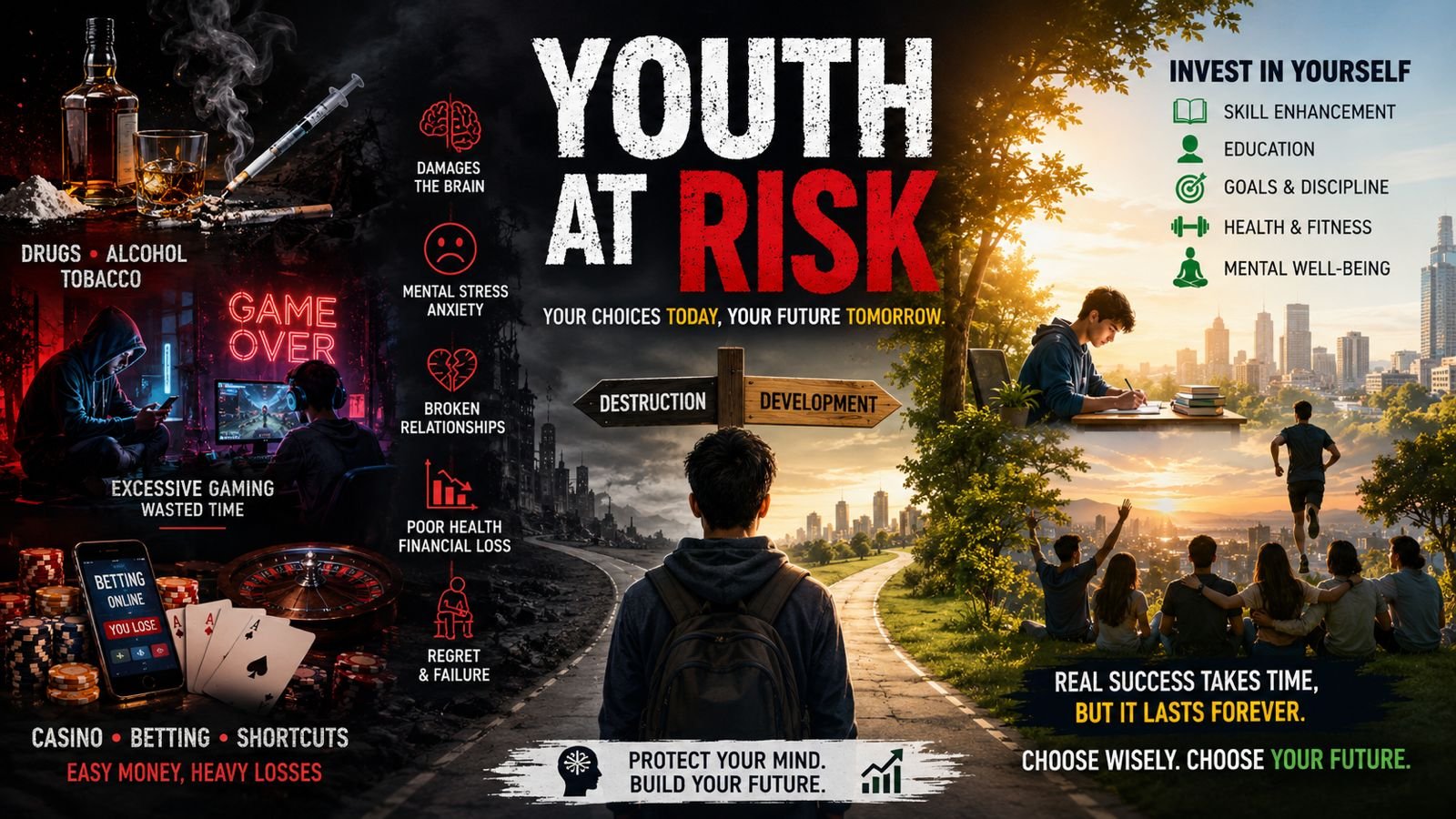
Youth at a Crossroads: Choose Growth Over Addiction
Today's youth possess unprecedented opportunities for learning, innovation, entrepreneurship, and personal growth. Technology has made knowledge accessible at the touch of a button, and countless avenues exist for skill development, career advancement, and self-improvement.
Yet, alongside these opportunities, a dangerous trend is emerging that is putting an entire generation at risk. Many young people are becoming trapped in harmful habits such as excessive consumption of drugs, alcohol, tobacco, vaping products, online gambling, casino games, and betting platforms.
What begins as experimentation, entertainment, or peer pressure often evolves into dependency, addiction, and long-term damage.
The Impact on the Body and Brain
Substance abuse does not merely affect physical health; it profoundly impacts the brain and neurological system. Drugs, alcohol, and tobacco alter brain chemistry, impair judgment, reduce concentration, weaken memory, and affect emotional stability.
Prolonged use can lead to anxiety, depression, reduced cognitive abilities, and, in severe cases, irreversible neurological damage. The youthful brain is still developing, making it especially vulnerable to these harmful influences.
Instead of strengthening their minds through education and skill enhancement, many young people unknowingly weaken their potential through addictive behaviors.
The Illusion of Easy Money
Another growing concern is the obsession with shortcuts to success. Online betting, gambling applications, fantasy gaming, and speculative schemes promise quick wealth with minimal effort. Social media often glorifies instant success stories, creating unrealistic expectations among young minds.
The reality, however, is far different. Most participants lose money, develop unhealthy habits, and become trapped in cycles of financial stress and emotional instability.
Sustainable success is built through knowledge, discipline, hard work, and persistence—not through gambling or shortcuts.
Gaming Addiction and Wasted Potential
Gaming can be a source of recreation when enjoyed in moderation. However, excessive gaming often consumes valuable time that could otherwise be invested in learning, physical fitness, creative pursuits, or professional development.
Hours spent chasing virtual rewards can gradually replace real-world achievements. The danger lies not in gaming itself but in allowing it to dominate one's life and distract from meaningful goals.
The Social Media Comparison Trap
Modern youth face another invisible enemy: constant comparison. Social media platforms frequently showcase only the highlights of people's lives—luxury lifestyles, expensive vacations, physical appearance, achievements, and material possessions.
Continuous exposure to such content often creates feelings of inadequacy, anxiety, and low self-esteem. Young individuals begin comparing their journey with someone else's edited reality.
This comparison culture damages confidence, creates unnecessary stress, and shifts focus away from personal growth and self-discovery.
Food and Lifestyle Obsession
An increasing number of young people are developing unhealthy obsessions regarding food, body image, and lifestyle trends. Influenced by celebrities, influencers, and unrealistic standards, they often believe that happiness and success depend solely on appearance.
This mindset can lead to poor mental health, unhealthy eating patterns, and a constant feeling of dissatisfaction. True well-being comes from balanced nutrition, regular exercise, mental peace, and self-acceptance—not from chasing unrealistic ideals.
Choosing Growth Over Destruction
The future belongs to those who invest in themselves. Every hour spent learning a new skill, reading a book, exercising, building relationships, or pursuing a meaningful goal contributes to long-term success.
Youth must recognize that their greatest asset is not money, popularity, or appearance—it is their mind. Protecting the mind from addiction, negativity, and unhealthy influences is essential for building a fulfilling life.
Conclusion
The youth of today stand at a crossroads. One path leads toward addiction, shortcuts, comparison, and temporary pleasures. The other leads toward education, skill development, discipline, character, and lasting success.
The choice made today will shape the future of individuals, families, and society as a whole. Let us encourage our youth to dream bigger, think deeper, learn continuously, and build a future founded on purpose rather than pleasure.
The greatest investment a young person can make is not in gambling, substances, or social validation—but in developing their own potential.