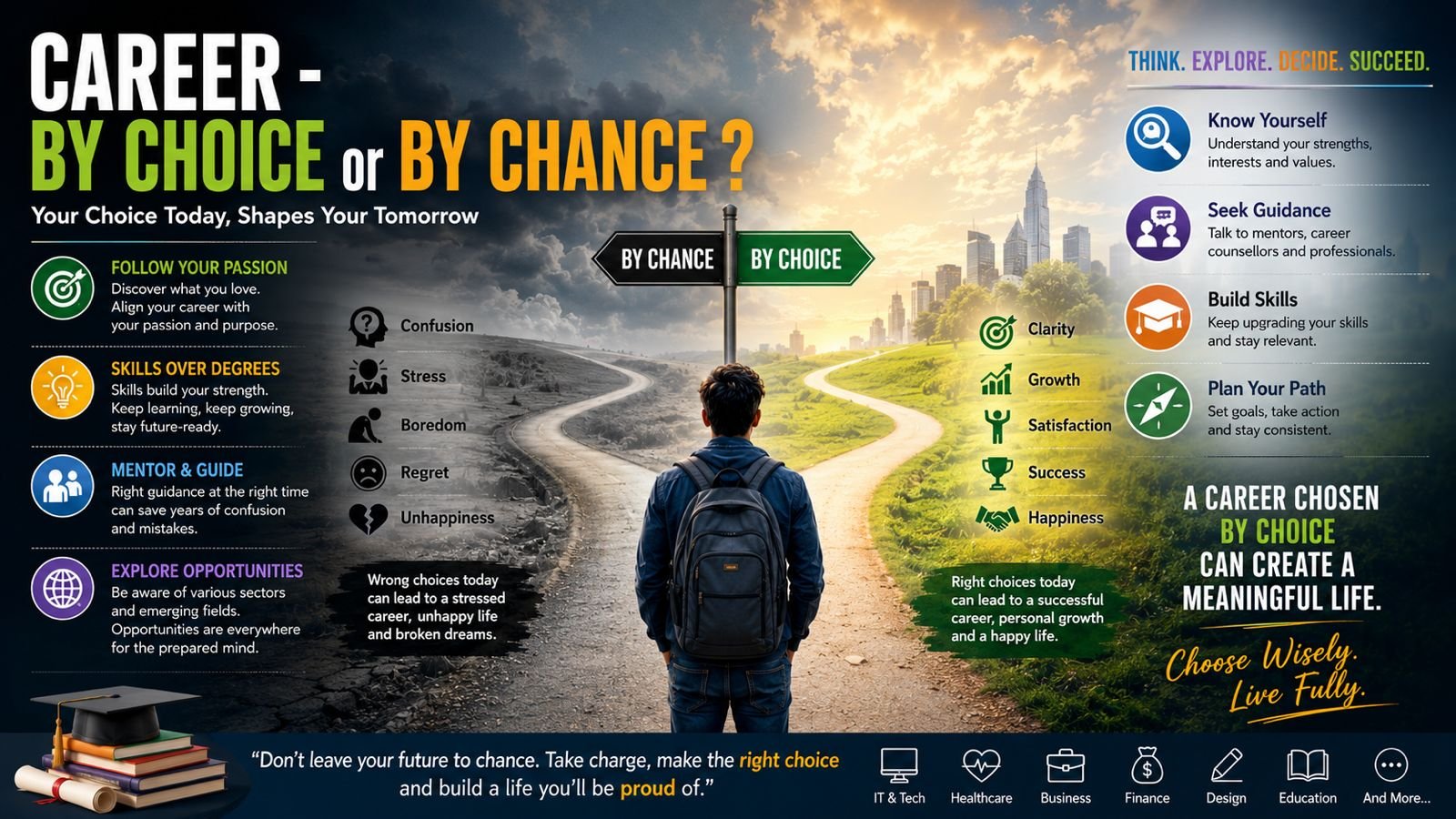
Career – By Choice or By Chance?
One of the most important decisions a person makes in life is choosing a career. Yet, many students and young professionals enter a career path not because it aligns with their passion and potential, but because of circumstances, family pressure, societal expectations, peer influence, or simply a lack of awareness.
The question every young person should ask is: “Am I building a career by choice or by chance?”
The answer can determine not only professional success but also personal happiness, mental well-being, and overall life satisfaction.
Beyond Degrees: The Importance of Skills
In today’s rapidly changing world, a degree alone is no longer enough. Employers are increasingly looking for individuals who possess practical skills, adaptability, creativity, communication abilities, problem-solving capabilities, and a willingness to learn.
A degree may open a door, but skills help you walk through it confidently.
Students must therefore focus on discovering and developing their strengths rather than blindly pursuing courses or careers that others consider prestigious. Every individual possesses unique talents and capabilities. Identifying these strengths early can help create a fulfilling and rewarding career journey.
Discovering Your Inner Potential
Success comes naturally when people work in fields that match their interests and abilities.
Some individuals excel in management, leadership, engineering, healthcare, information technology, finance, design, entrepreneurship, education, hospitality, media, or public service.
There is no “best” career for everyone.
The best career is the one that aligns with:
- Your interests and passions
- Your natural strengths and abilities
- Your personality and work style
- Future opportunities and industry demand
- Your long-term life goals
When passion and potential come together, performance improves, confidence grows, and career satisfaction increases.
Why Mentors and Career Guides Matter
Many students and graduates struggle because they lack proper guidance.
A mentor or career counsellor can help young individuals:
- Understand their strengths and weaknesses
- Explore various career opportunities
- Learn about emerging industries and future job trends
- Choose suitable courses and qualifications
- Avoid costly career mistakes
- Create a clear roadmap for professional growth
Making career decisions without adequate information is like starting a journey without a map. Guidance from experienced professionals helps students make informed decisions rather than emotional or impulsive choices.
Awareness Creates Opportunities
Today, employment opportunities exist across numerous sectors:
- Management and Business
- Information Technology
- Artificial Intelligence and Data Science
- Healthcare and Allied Services
- Finance and Banking
- Digital Marketing
- Hospitality and Tourism
- Manufacturing and Operations
- Entrepreneurship and Startups
- Government and Public Services
- Creative Arts and Media
- Skill-Based Vocations
Unfortunately, many talented young people remain unemployed not because opportunities do not exist, but because they are unaware of the possibilities available to them.
Career awareness is the first step towards career success.
The Cost of Choosing the Wrong Career
When individuals choose a career solely due to external pressure or circumstances, they often experience:
- Lack of motivation
- Reduced productivity
- Professional dissatisfaction
- Stress and anxiety
- Career confusion
- Frequent job changes
- Burnout and frustration
A career is not merely a source of income—it becomes a significant part of one’s identity and daily life. Therefore, choosing wisely is essential.
Think Before You Decide:
Before selecting a career path, every student should:
- Understand their strengths and interests
- Explore multiple career options
- Research future industry opportunities
- Speak with mentors and career counsellors
- Gain practical exposure through internships and projects
- Focus on skill development alongside academic qualifications
A well-informed decision today can prevent years of confusion tomorrow.